

The Planetarium: Waiting in the merch area while Wicked Uncle does their sound check (photo by Kevin Toyama)
It’s something we have taken for granted, and now seem to miss. It’s meatspace making a comeback against cyberspace. Having a conversation with a real human being in the flesh is becoming a precious thing, now sought after in the real world. In the age of AI chatbots, we need a break to be around other people and enjoy their company. We need an offline opportunity to listen and then talk. We need to see someone actually looking at us, and not a camera. Here are a few new ways to create spaces that build community.
Table of Contents
The Planetarium
By Make: Books Editor Kevin Toyama
When Make: Sr. Community & Program Manager Jen Blakeslee dropped this KQED story about a new performance venue into our office Slack, it caught my attention—I love seeing new bands and performers, and the weirder the better!
And when I read that The Planetarium in Richmond, CA was an all-ages, substance-free venue, I thought, “Oh, I have to tell Kirk about this place.” Kirk Pearson, author of Make: Electronic Music from Scratch, had passionately spoken about the need for young people to have a place to perform—to express their art while making human connections that only happens in person—while we worked together on his book.
Seven paragraphs in, I learned that Kirk is one of the cofounders. Of course he is! He told me to come out to one of the “Cosmik Debris” variety shows, and so I did—and boy, was there a lot of variety!
Psychedelic space rock? Check. Lip-syncing clown singing a duet of Lady A’s “Just a Kiss” with a puppet? You betcha. There was even a performance by Maker Faire Bay Area 2025 exhibitor and sound artist Bryan Day!

Modesto, Calif.-based band Bustard kicked off February’s Cosmik Debris. (video still by Kevin Toyama)

I’m scared of clowns, but Klowndra made me reconsider my stance. . . . (video still by Kevin Toyama)

Bryan Day shared his original analog instruments at MFBA25, but did a surreal electronic set at The Planetarium. (We like the tape measures) (photo by Kevin Toyama)
Marin Independent Journal Best Local Band honoree Wicked Uncle’s power pop, DJ Don’t Tell Mom comedic linguistics, and a second performance by Klowndra on roller skates rounded out a killer night of entertainment.
The intimate space enables bands who can’t draw 300-person crowds to have a place to play, and The Planetarium’s all-ages setup provides an opportunity for young artists to perform in front of a real audience. Perhaps more importantly, it gives young fans a place to experience the energy of live shows.
Kirk and his fellow Planetarium cofounders Lexi and Alex Bodkin will be writing about how they made such a rad community performance space in an upcoming issue of Make:, but in the meantime, come to a show and experience The Planetarium for yourself . . . and make sure to say hello if you see me there!
I interviewed Kirk Pearson on the Make:cast podcast last year. He is the author ‘Electronic Music from Scratch,’ and the developer of the Boxytone Synth Kit, available on Maker Shed.
Conference Calendar
Paul Spinrad, former Make: Editor, came up with an idea for promoting in-person topic-driven conversations where he lives. “Like many others, I’ve wanted to dial down my screen time and venture out of the bubbles that I’m in,” he wrote. He wanted to promote conversation in small groups, not one-way talks.
In his Conference Manifesto, Paul wrote that he was looking for “edgy, alternative or not yet widely processed but not threatening” topics. “You don’t have to be an expert but people will appreciate it if you are.” There’s no recording or photography allowed; he wrote: “the folks who miss a discussion that they’re interested in will have to heart about it from the people who went.”
Because he didn’t have his own space, he talked to coffee shop and bar owners in Berkeley and Oakland and asked whether they’d allow small groups of people to gather for a discussion on a topic of mutual interest. Many of them agreed to participate. He came up with a list of topics that he hoped others would find interesting. He admits to guessing for the first month.
His February topics included Geneaology, Paranormal Experiences, Community Economics, and Parenting Teens. In its first month, nobody showed up to talk about The Crusades but five or six people showed up to talk about UFOs and Alien Intelligence.
To promote the talks, Paul worked with a designer to create a poster (inspired by old movie rep house calendars) that lists a month of suggested topics at particular dates and locations. The poster itself is wonderful. Paul said that it “capture(s) the real world, untracked, analog-ness of the whole setup.

Screenshot of Conference Calendar
Here’s a PDF of the poster from the confcal.org website.

Paul is experimenting with an interesting model that could be adapted and tried in other locations, including makerspaces. We need more social clubs.
That AI imitation of you is the sincerest form of flattery
@Odd_Jayy posted on Mastodon that “THIS IS NOT OK. SOME PEOPLE ARE USING A.I. to pretend that (they’re) being mentored by me #AI #aislop.” Oops.

Art Director Juliann Brown finds interesting projects on Instagram and she drops them in our Slack.
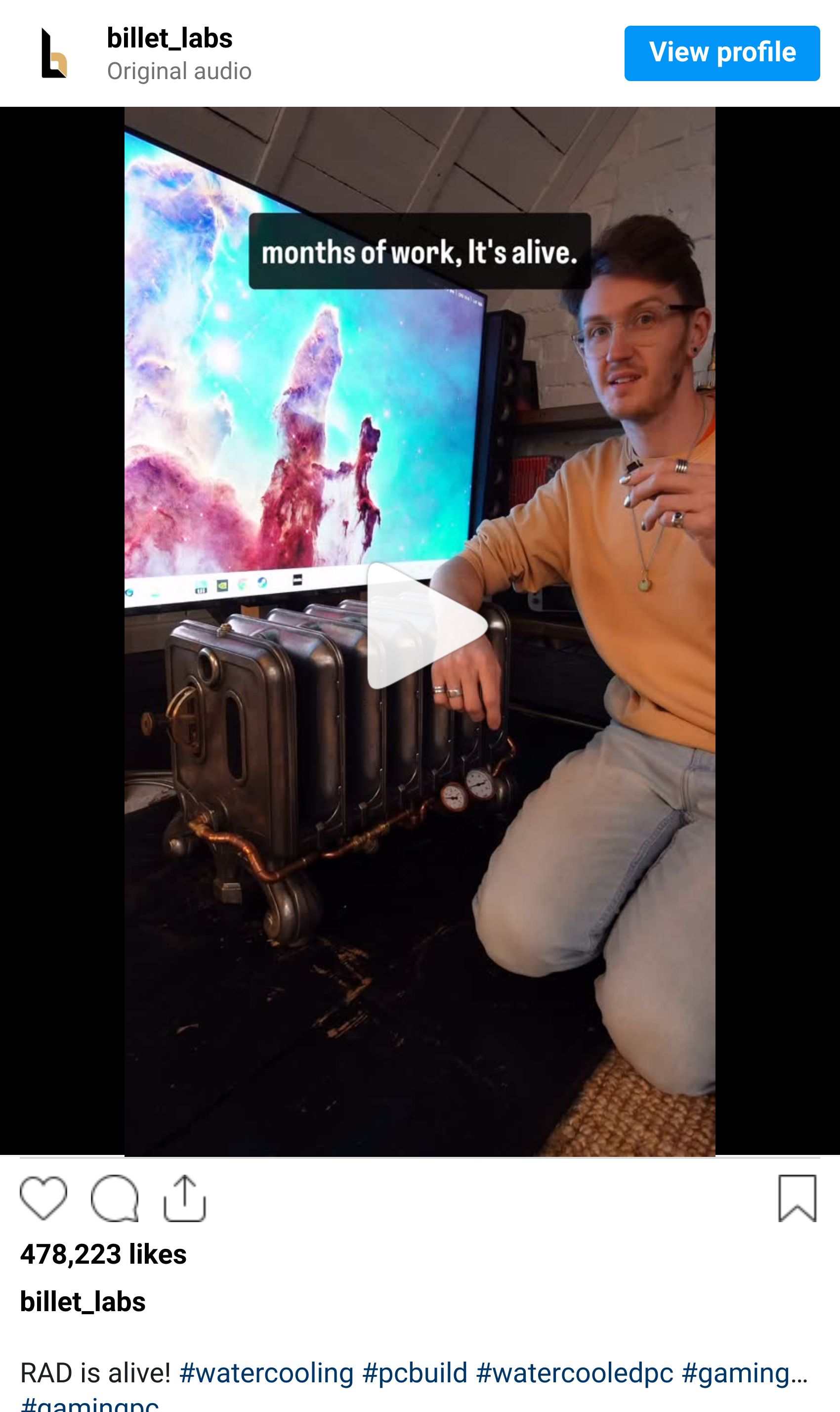
Gaming PC built from a Victorian radiator.
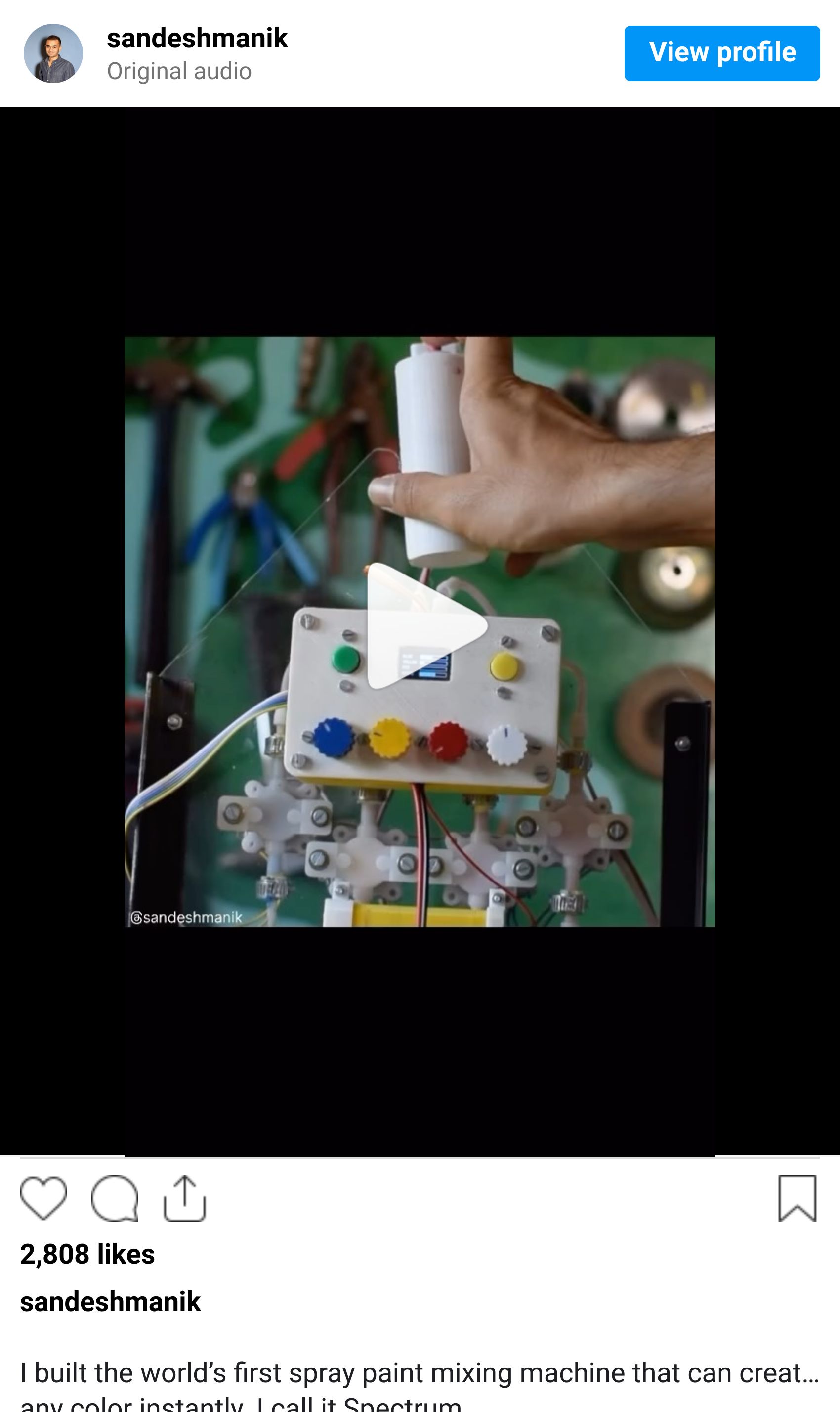
Spectrum spray painting mechanism blending 4 basic paint colors to generate your color choices. It even does a gradient.
Keep on Making.
Make Things is a weekly newsletter for the Maker community from Make:. This newsletter lives on the web at makethings.make.co
I’d love to hear from you if you have ideas, projects or news items about the maker community. Email me - [email protected].
