

Table of Contents
Making in the zeitgeist
By Kevin Toyama, Make: Books Editor
Have you seen Hoppers and Project Hail Mary? Both have a great story, are a fun ride, and totally worth seeing in the theater. And they both caught my maker attention.
There’s a scene in Hoppers where the college-aged protagonist Mabel stumbles into her professor’s lab, where she discovers . . . well, watch the trailer below from the 0:16 mark.
In years past, that scene would’ve been set in a fancy million-dollar R&D facility, from Real Genius to The Dark Knight. But in 2026, the lab looks like any number of makerspaces from around the world, populated by old electronics, half-finished prototypes, simple hand tools, a laptop, and — at its center — a 3D printer. (And pizza boxes, because nothing says “working late nights” like empty pizza boxes.)
It’s pretty cool to see Pixar depicting innovation as coming from a makerspace, with down-and-dirty machines that look cobbled together instead of gleaming with polished perfection. Pixar understands what making is all about (as you’ll see in my forthcoming Pixar article in Make: magazine’s May issue!), but it’s noteworthy that the studio also recognizes that audiences understand this.
Project Hail Mary has its maker moment, too. It’s not Ryan Gosling’s Grace character soldering our solar system onto alien Rocky’s celestial model, or Rocky crafting a “visualizer” out of a crystal so it can see like a human. In one of the film’s most charming scenes, Grace and Lionel Boyce’s Carl shop for duct tape, aluminum foil, plywood, and other common supplies to build a makeshift experiment to test the alien astrophage organisms.
Movies hold up a mirror to reality, because a scene only makes sense if the audience understands what’s going on. Through his lab choice, Hoppers director Daniel Chong is saying this is where the public sees innovative research happening today, in places just like your local makerspace. Project Hail Mary directors Phil Lord and Christopher Miller similarly tip their cards by grounding their story with a low-fi experiment: having the hero solve a puzzle in a way that the audience could do it makes the film more immersive and relatable. “Oh, I could do that!”
Hollywood knows that maker culture has become normalized. And if you don’t know “maker culture” is now simply “culture”?
You’re smart. You’ll figure it out.
Calling all makers
Maker Faire is about makers sharing what they are working on — their projects. It’s been my experience that a lot of makers don’t think that their projects are ready to show to others or — gasp! — not even good enough. Most of them are wrong, and when they show up at Maker Faire and interact with others, they’re delighted to be so wrong and enjoy being among others they can learn from. Now is the time to apply to be an exhibitor at Maker Faire Bay Area, which takes place September 25, 26 & 27 at Mare Island in Vallejo, California.
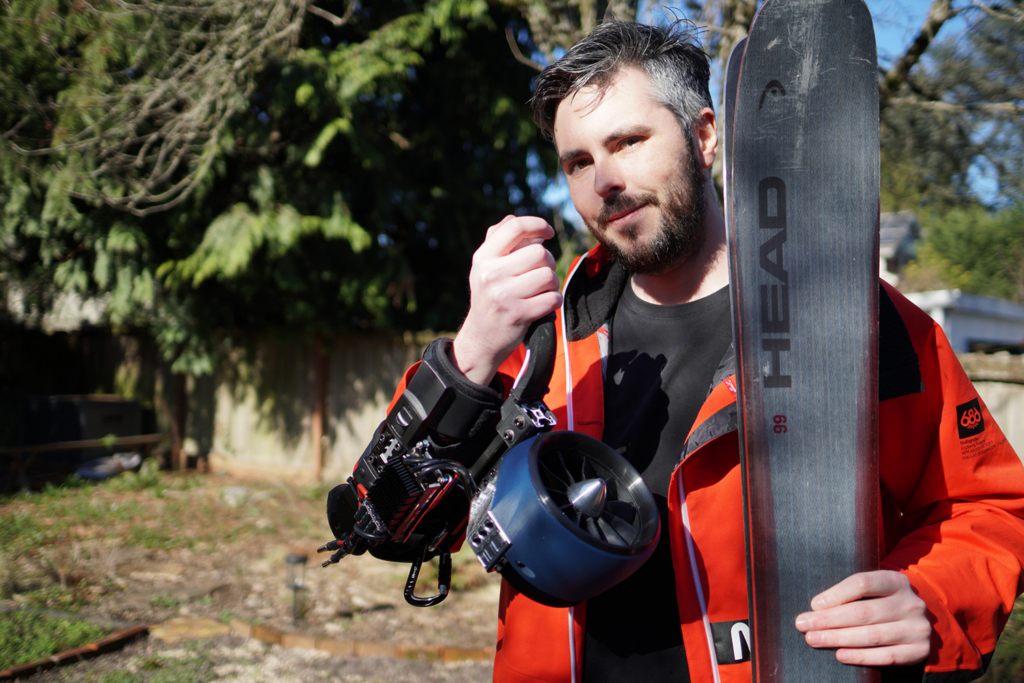
Methodical Maker’s jet-powered snow skiing
Going down a ski slope, Alex, a.k.a. Methodical Maker, “had strapped 16 kilowatts of electric jet thrust to my arms, and it was exhilarating! This project had lived in my head for years, and I had just made it a reality.” He wondered what it would be like to go really fast downhill. Watch Methodical Maker’s video of him skiing under jet power, then read Alex’s explanation of how he did it in an article on Makezine.com. He said it was “an impractical idea” but “I just needed to know if it could be done.”
Make Things is a weekly newsletter for the Maker community from Make:. This newsletter lives on the web at makethings.make.co
I’d love to hear from you if you have ideas, projects, or news items about the maker community. Email me - [email protected].
