

Human hamster wheel at Maker Faire Prague (photo by Kirstin Berbawy)
With the huge SpaceX IPO dominating the news, along with massive layoffs from tech companies like Meta, perhaps it is as good a time as ever to start something small, like your own startup. You need a good idea; you have to be willing to bet on yourself; and you want to involve many other people in roles such as teammates, advisors, mentors, investors, and, of course, customers. No one will tell you that it’s easy just that it’s possible. Now might be the right time to do it. Remember, success can be whatever you define it to be. If you’re working on a startup, let me know.
Table of Contents
Humanmade’s Hardware Accelerator
On Thursday night, I went to Humanmade in San Francisco for the launch of their hardware accelerator program for this year. (I’ve written recently about Humanmade, a relatively new makerspace on Bryant Street in San Francisco.) At this kickoff, they had two teams from last year’s cohort show their work, and then each of the 14 teams from this year presented. I wanted to share a few observations.
The pitches were full of fresh ideas and their enthusiasm for their projects was also refreshing.
Because it’s a hardware accelerator, the startups were working on hardware and software solutions, and the majority were aimed at solving a problems for a set of consumers. They were grateful to be accepted into the program to have access the tools and space at Humanmade to work on their prototypes.
None of them were strictly AI applications, and only a few were using AI in their product. One of the participants said it is daunting to be doing a non-AI startup in San Francisco, where every billboard in the city is an advertisement for an AI company.
Many of the participants were graduates of Stanford or UC Berkeley, while others had worked in large companies and believed it was time for them to do a startup of their own.
San Francisco is a magnet for people who want to do startups. They come here wanting to meet other people doing startups. It works.
Most of them had already spent a lot of time on their project. I can’t think that any of them showed up with just the idea. They have been working on their project for a while; they have put together teams of people to help them and they had also found advisors from academia or business.
Most of them used Instagram to get their story out, eschewing a website or even an email address. They are trying to build a community online and plan to keep telling their story to engage others.
Most of their product ideas came from life experiences, a problem they knew first-hand.
One of companies in the accelerator is Casacurl, started by a Stanford grad, Roxy Reeves, who owns a hair salon in Oakland. She thinks that some women would like to have something at home that she has in her salon — a hooded hair dryer. She is designing one that doubles as a lamp.
Several of the startups were creating projects that encouraged you to go outside, such as Raviteja Lingineni’s Kitiki Computers, which offers a kit-laptop that uses an e-ink display, which works well in sunlight. Or in the case of Harrison Lin’s Rhythm, bring the sun inside with its sunlight generator. Lin who was in last year’s cohort demonstrated his most recent version of his product.

Harrison Lin of Rhythm
At Make:, we champion the little guy, the underdog, the crazy ones, the enthusiasts who bet on themselves and their ideas.
Burner Makerspaces and Community
Taylor Burke’s article in the Burning Man Journal about how makerspaces like The Reno Generator are used by burners to build things and — build community and connection.

She writes:
Burning Man and the global maker movement are inextricably intertwined. Both welcome beginners and experts alike, while fostering a communal, hands-on approach to building tangible objects that become works of art, helpful structures, and engineered wonders.
We are living through an epidemic of disconnection… The hunger for genuine human contact doesn’t go away; it just gets louder. Burning Man and the community built through makerspaces offer something different: a place where people spend an entire year not tearing things down, but building them. Not hiding the worst of themselves, but showing off the best.
Says co-founder of The Reno Generator, Jerry Snyder said: “This is like the movie Ratatouille. A good cook can come from anywhere. You lower the barriers of entry for people who have the talent but not the opportunity — you never know where the next genius is coming from.”
Player Piano
“We’re engineers. If you leave us alone, we’re going to make things.” — Karina Bender
Karina Bender and George Grigoryan, two engineering students at the UCLA Samueli School of Engineering Makerspace, turned a second-hand piano into a player piano. Jacob Schmidt, the professor who oversees the space, said the project was the “best thing he’s seen in the eight years the space has been open.” Apparently, Bender and Grigoryan decided to do this project on their own, not for a particular class and Schmidt worried that it was too big project for them to take on but the two students completed the project.
The piano has 88 keys, each of which is connected to an actuator that is controlled by a microcontroller. The music is in a MIDI file. Grigoryan said that he uses a Python library to convert the MIDI file into instructions that are sent to the microcontroller. “The computer sends line by line which note to play at what time to the microcontrollers and the microcontrollers control all the solenoids,” said Grigoryan. When it played the first song recognizably, Bender said “it was a very magical moment.”

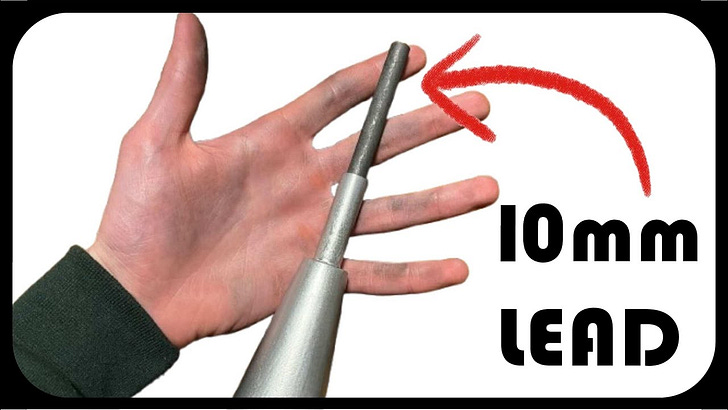
Giant mechanical pencil
Check out this story about make Bob Seif who built a working mechanical pencil 72 inches long. He’s bringing it to Maker Faire Bay Area.
Maker Faire Prague
Kirstin Berbawy, a Bay Area maker and maker educator, has been to Maker Maker Faire Bay area many times. This year, she decided to go to Maker Faire Prague. Photos from her experience on the trip can be found in this article on Makezine.
This May, she took that opportunity for herself and traveled to Prague to check out what makers across the Atlantic get up to. Maker Faire Prague didn’t disappoint: Bigger than she expected and buzzing with thousands of visitors, packed exhibition halls, and the kind of joyful energy familiar to anyone who has wandered through a Maker Faire anywhere in the world. Familiar, she noted, but uniquely Czech — the universal language of making needed no translation. She drew an analogy to a previous experience visiting Disneyland in Hong Kong: everything was recognizable, but filtered through a different language, history, and cultural lens.

Kirstin Berbawy and Josef Prusa
Father’s Day is coming up
Next Sunday, June 21st, is Father’s Day. Do you a story of how your father helped you become a maker or how you as a father have helped a child learn to be a maker? I’d like to publish your story in next week’s newsletter. Email me - [email protected].
Make Things is a weekly newsletter for the Maker community from Make:. This newsletter lives on the web at makethings.make.co
